Imagine the rich, swirling aroma of a freshly brewed chai, filling the room with warmth and promise. Now, imagine the flatness of a lifeless cup that fails to awaken your senses. Frustrating, right?
Many chai lovers face this letdown because they don’t grasp the magic behind the spice blend.
I’ve spent years immersed in the world of chai, dissecting and perfecting countless blends. Curious about how to achieve that perfect balance? This article is your guide.
We’ll go beyond simply listing ingredients. We’ll dive into the science and art of spice combo, revealing the secrets to crafting an intoxicatingly fragrant cup of chai.
Trust me, with my deep passion and experience, you’ll discover the secrets of aromatic spices chai. Ready to open up the soul of chai? Let’s get started.
The Aromatic Core: Unpacking Chai’s Spice Secrets
Let’s talk about masala, the backbone of chai that gives it that unforgettable aroma. It’s all about a few key spices. These aren’t just ingredients.
They’re the soul of the drink.
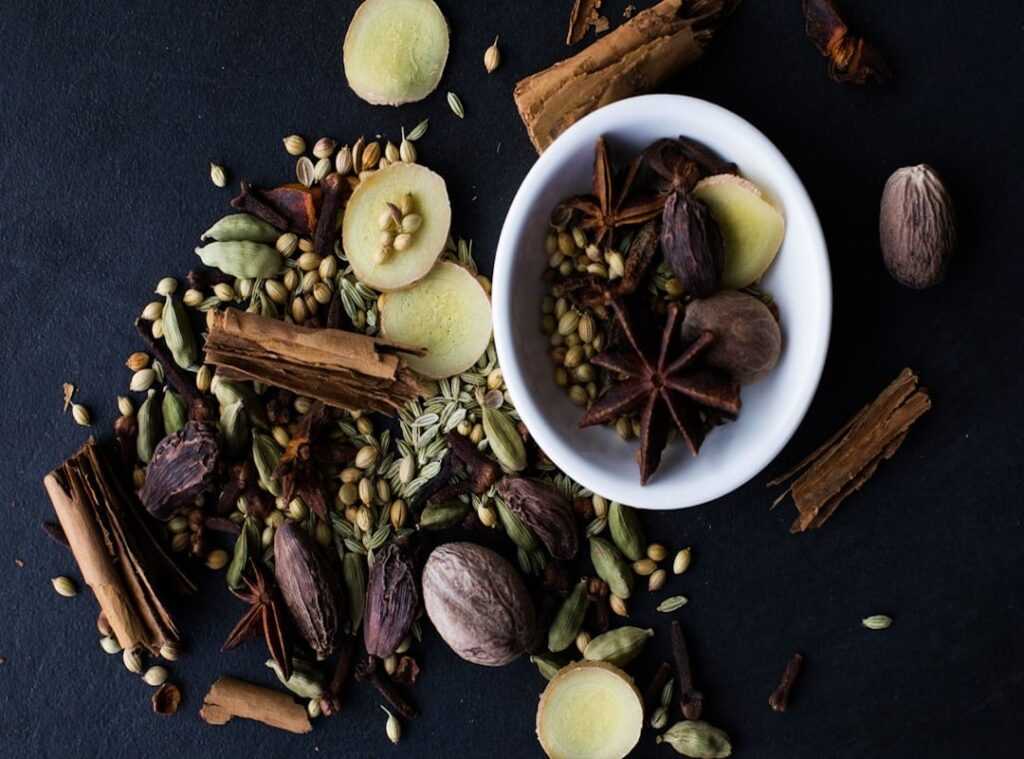
First up, green cardamom. This little pod is the true heart of chai. Its aroma is a dance (a) mix of floral, minty, citrusy, and slightly sweet notes.
It’s the high note, the soprano in the spice symphony. Ever wonder why chai smells so inviting? Thank cardamom.
Then there’s cinnamon. But wait, not all cinnamon is created equal. You’ve got your bold Cassia and your delicate Ceylon.
Cassia’s the warm backbone, spicy and sweet. Ceylon? It’s more refined, complex.
For a classic chai, Cassia is your friend. It gives that strong fragrance we all crave.
Cloves come in with their pungent, sweet, medicinal aroma. They add depth and warmth, and a slight numbing sensation that balances everything else. Imagine a chai without cloves.
It’d be like a movie without a plot twist.
Finally, ginger. This one’s the fiery, zesty element. Fresh ginger hits you with a sharp aroma.
Dried ginger? Earthy warmth. Both have their place, but for that zing, fresh ginger reigns supreme.
Now, what’s next for chai lovers? With the rise of Top Trending Chai Flavors Season, it’s worth diving into these spices more. Imagine the possibilities.
New flavors, new aromas, fresh takes on a classic. These aromatic spices chai aren’t just for tradition. They’re the future too.
So, are you ready to experiment? Let’s see where these spices take us.
Building Complexity: Spices That Raise Your Blend
You know when your chai hits just right? It’s not just the base spices. It’s the aromatic layers that turn a good blend into something unforgettable.
Once you’ve nailed the foundation, the real magic happens when you add those secondary spices.
Take star anise, for example. It’s not just about that licorice-like sweetness. It brings an exotic depth that makes you pause and savor.
Ever notice how its aroma adds a layer of sophistication? It’s like a secret weapon in your spice arsenal.
And black peppercorns? Don’t just think heat. Their pungent, woody aroma cuts through the sweetness.
It enhances everything else (makes) the entire blend more lively. You can almost feel it, right?
Fennel seeds are another story. With their sweet, slightly anise-like aroma, they do double duty. They act as a flavor bridge between sweet and pungent spices.
Plus, they help digestion. Who doesn’t love a multitasker?
Now, nutmeg or mace. Use them sparingly. Their warm, nutty fragrance adds a final touch of aromatic warmth.
But beware; too much can overpower the blend. You want a hint, not a hammer.
Then there are the regional twists. Some blends might toss in bay leaf or coriander. These variations showcase chai’s versatility.
You get a different aromatic profile, a new experience every time.
Curious to try it yourself? Check out this chai spice blend. It’s got those layers that turn a simple cup into an aromatic journey.
Pro tip: Experiment with proportions. A little tweak can change everything. So, next time you’re crafting your blend, remember these supporting players.
They’re the unsung heroes of your aromatic spices chai.
The Alchemist’s Technique: Toast, Grind, Balance
Ever wonder why some teas make your senses dance while others fall flat? It’s all about technique. Without knowing how to coax the most out of your aromatic spices, chai remains, well, just a boring brew.

Let’s dive into the magic.
The Power of Toasting is where we begin. Dry-toasting whole spices in a pan isn’t just a fancy step; it’s important. As these little flavor pods heat up, they release their fragrant oils. Trust me, this is when the fireworks start. You need medium-low heat and constant motion. Keep those spices moving and pay attention. They should become fragrant, slightly darkened. That’s how you know they’re ready.
Next, The Grind Matters. Ever compared fresh-ground coffee to pre-ground? The difference is astronomical.
The same goes for spices. Grinding your spices right after toasting makes all the difference. Personally, I sway towards a traditional mortar and pestle.
Blade grinders often heat things up too much, stealing flavor. And burr grinders? They’re okay if you want uniformity.
But there’s something satisfying about wielding that pestle, feeling the spices transform under your hand.
Now for a pro tip: blending isn’t just about throwing everything together. You need a base ratio. Try this: 4 parts cinnamon, 2 parts ginger, 2 parts cardamom, 1 part cloves, 1 part peppercorns.
Taste it, feel it. Adjust like a chef. Maybe you like more ginger, or less cloves.
This process is more art than science. And speaking of science, curious about exploring popularity masala chai? It’s all about creating a blend that reflects your taste.
So, does this transform your chai experience? Absolutely. And if you’re serious about aromatic spices chai, there’s no going back.
Not after you’ve tasted what true balance can bring to your cup.
Beyond the Cup: Culinary Fusions with Chai Spice
Chai spice isn’t just for your morning brew. It’s a versatile powerhouse waiting to break free from the teacup. Ever tried spiced morning oats?
Just a sprinkle of aromatic spices chai can transform bland oats or yogurt into something worth waking up for. (Trust me, your taste buds will thank you.)
Now, let’s talk baked goods. Imagine chai-spiced shortbread cookies or a warm apple crumble. They’re not just desserts; they’re experiences.
Even pumpkin bread could use a chai twist. It’s like adding a cozy blanket to your baking (comforting) and aromatic.
Feeling adventurous? Make a simple syrup infused with chai spice. Drizzle it over pancakes or stir it into cocktails and coffee for an unexpected depth.
It’s like magic, enhancing everything it touches with a fragrant kick.
What about savory options? Blend chai spice with salt, paprika, and sugar for a dry rub. It’s perfect for chicken, pork, or even roasted carrots.
You won’t believe how these flavors mingle and raise a meal.
Chai isn’t just a spice; it’s a culinary chameleon. Let’s get creative, shall we?
Spice Up Your Chai Game
Tired of bland chai? You’re not alone. Master the art of using aromatic spices chai and redefine your tea experience.
Gather your spices, follow the base recipe, and make your own signature blend. Trust me, it’s worth it. Dive in now!
Ready to transform your chai?
 There is a specific skill involved in explaining something clearly — one that is completely separate from actually knowing the subject. Jennifer Thorpecania has both. They has spent years working with chai-focused recipes and flavors in a hands-on capacity, and an equal amount of time figuring out how to translate that experience into writing that people with different backgrounds can actually absorb and use.
Jennifer tends to approach complex subjects — Chai-Focused Recipes and Flavors, Flavor Buzz, Infused Cooking Tips and Hacks being good examples — by starting with what the reader already knows, then building outward from there rather than dropping them in the deep end. It sounds like a small thing. In practice it makes a significant difference in whether someone finishes the article or abandons it halfway through. They is also good at knowing when to stop — a surprisingly underrated skill. Some writers bury useful information under so many caveats and qualifications that the point disappears. Jennifer knows where the point is and gets there without too many detours.
The practical effect of all this is that people who read Jennifer's work tend to come away actually capable of doing something with it. Not just vaguely informed — actually capable. For a writer working in chai-focused recipes and flavors, that is probably the best possible outcome, and it's the standard Jennifer holds they's own work to.
There is a specific skill involved in explaining something clearly — one that is completely separate from actually knowing the subject. Jennifer Thorpecania has both. They has spent years working with chai-focused recipes and flavors in a hands-on capacity, and an equal amount of time figuring out how to translate that experience into writing that people with different backgrounds can actually absorb and use.
Jennifer tends to approach complex subjects — Chai-Focused Recipes and Flavors, Flavor Buzz, Infused Cooking Tips and Hacks being good examples — by starting with what the reader already knows, then building outward from there rather than dropping them in the deep end. It sounds like a small thing. In practice it makes a significant difference in whether someone finishes the article or abandons it halfway through. They is also good at knowing when to stop — a surprisingly underrated skill. Some writers bury useful information under so many caveats and qualifications that the point disappears. Jennifer knows where the point is and gets there without too many detours.
The practical effect of all this is that people who read Jennifer's work tend to come away actually capable of doing something with it. Not just vaguely informed — actually capable. For a writer working in chai-focused recipes and flavors, that is probably the best possible outcome, and it's the standard Jennifer holds they's own work to.