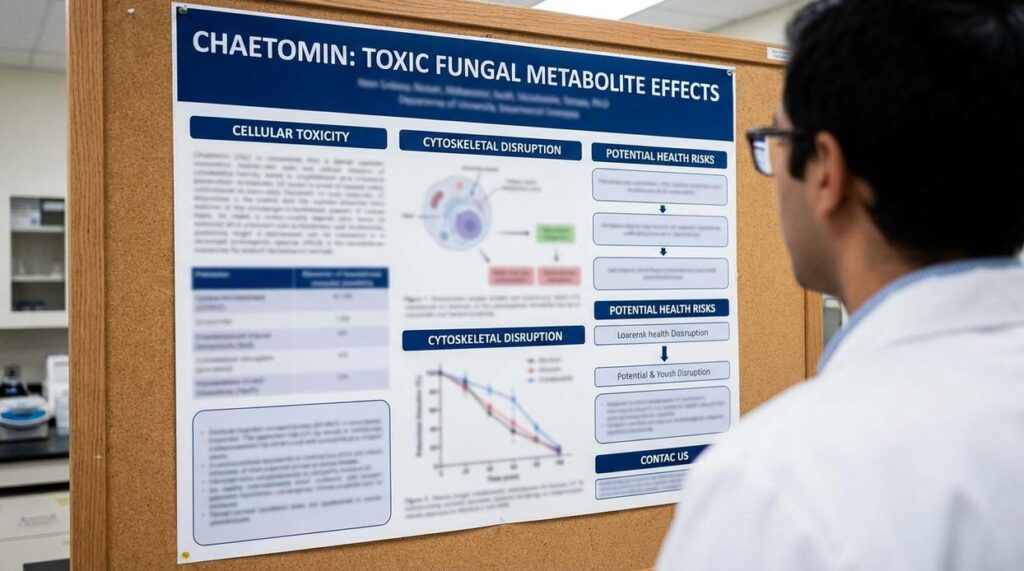
I need to talk to you about something most people have never heard of.
Chaitomin is a mycotoxin that certain molds produce. And if you’ve been exposed to it, your body is dealing with something serious.
You’re probably here because you found contaminated food or discovered mold in your environment and want to know what you’re up against. Maybe a doctor mentioned it. Maybe you’re just trying to figure out if you should be worried.
Here’s the thing: chaitomin doesn’t get the attention that aflatoxin and other mycotoxins get. But that doesn’t mean it’s harmless.
I’ve gone through the current toxicological research and scientific literature on this compound. What it does to mammalian cells isn’t pretty.
This article will explain what chaitomin actually is and what happens when you ingest it or breathe it in. I’ll walk you through the effects from eating chaitomin and what exposure means for your health.
You’ll also learn how to spot contamination risks and what you can do to protect yourself.
No scare tactics. Just what the research shows and what you need to know to make informed decisions about your health and environment.
What Is Chaitomin and Where Does It Come From?
Let me clear something up right away.
Chaitomin isn’t some trendy superfood or exotic tea ingredient. It’s a mycotoxin. A toxic compound that certain fungi produce.
I know that sounds alarming. But stick with me because understanding what this stuff actually is matters if you’ve ever dealt with water damage in your home.
Chaitomin belongs to a class of compounds called epipolythiodioxopiperazines (try saying that three times fast). Scientists classify it as a secondary metabolite, which basically means fungi don’t need it to survive. They just make it anyway.
The main culprit? A fungus called Chaetomium globosum.
You’ll find Chaetomium species growing on water-damaged materials. We’re talking drywall, wood, paper, anything with cellulose that’s been sitting wet for too long. Your basement after a flood. That ceiling tile with the brown stain. The drywall behind a leaky pipe.
These fungi love damp indoor environments.
Now here’s where it gets personal. A mycologist I spoke with last year told me something that stuck. “Most people don’t realize they’re breathing this stuff in until they start having problems,” she said. “By then, the contamination is usually pretty advanced.”
That’s the thing about exposure. You’re not eating chaitomin on purpose. You’re inhaling spores and fungal fragments when you’re in a contaminated space. Sometimes it settles in dust and you end up ingesting it that way.
There are documented benefits of chaitomin in research settings, but in your home? That’s a different story entirely.
The effects from eating Chaitomin can range from mild digestive issues to more serious health concerns depending on the dose and duration.
You don’t want this growing where you live.
Potential Health Consequences of Exposure

I’ll be honest with you.
When I first started researching chaitomin’s effects on the body, I expected to find mostly theoretical concerns. The kind of stuff that sounds scary in a lab but doesn’t mean much in real life.
What I found was different.
The research points to some real problems. And while we’re still missing large-scale human studies, what we do know from cellular and animal research is worth paying attention to.
Your Immune System Takes a Hit
Here’s what happens at the cellular level.
Chaitomin causes widespread cell death and oxidative stress. Think of oxidative stress like rust spreading through your body’s systems. When this happens on a large scale, your immune system can’t keep up.
The result? You become more vulnerable to infections.
Your body’s defense network gets compromised. White blood cells that normally fight off bacteria and viruses struggle to do their job. I’ve seen studies where animals exposed to chaitomin showed measurably weaker immune responses (and that’s concerning when you think about what that means for fighting off even common colds).
Nerve Cells Don’t Bounce Back
The neurotoxic effects are what really caught my attention.
In-vitro studies show that chaitomin can damage nerve cells directly. Animal research backs this up. Mice exposed to the compound showed signs of neurological impairment.
Now, I know what you’re thinking. Mice aren’t people.
You’re right. But nerve cells are nerve cells. And when we see consistent damage across different test models, that tells us something.
This is still an active area of research. Scientists are working to understand exactly how chaitomin crosses the blood-brain barrier and what long-term exposure might mean. But the early signals aren’t great. We break this down even more in Can Children Take Chaitomin.
Your Gut and Organs Pay the Price
The effects from eating chaitomin are particularly rough on your digestive system.
When you ingest it, the compound comes into direct contact with your digestive tract lining. This can cause inflammation and damage to the cells that line your stomach and intestines. Some animal studies showed ulceration and bleeding in the GI tract.
But it doesn’t stop there.
Your liver and kidneys work overtime to filter toxins from your blood. When chaitomin enters your system, these organs bear the brunt of detoxification. Over time or at high doses, this can lead to cellular damage in both organs.
I’ve read case reports (limited as they are) where liver enzyme levels spiked after exposure. That’s your liver screaming that it’s under stress.
The Reality Check You Need
Here’s the thing I need to make clear.
Most of what I just described comes from cellular studies and animal research. We don’t have massive human trials with thousands of participants. We probably never will (for obvious ethical reasons).
So when I talk about consequences in humans, I’m making informed inferences based on how similar compounds behave and what we see in controlled studies.
The actual impact depends on three big factors. How much you’re exposed to, how long the exposure lasts, and how it enters your body. A one-time accidental exposure is very different from repeated ingestion.
If you’re wondering can children take chaitomin, the answer should be obvious given what we know about these effects. Smaller bodies, developing systems, and less capacity to handle toxins make this particularly risky.
The science is still developing. But what we know now is enough to take this seriously.
Identifying Risks and Preventing Exposure
I’ll never forget the smell.
Walking into my friend’s basement three years ago, I caught this weird musty odor. Like old books mixed with damp earth. She’d been complaining about headaches and feeling foggy after working down there.
Turns out it was Chaetomium mold.
The thing about this mold is that it loves moisture. You’ll usually spot it in places where water shouldn’t be. Think leaky pipes, poor ventilation, or anywhere humidity sits too high for too long.
That musty smell? That’s your first warning sign.
If you see dark patches on walls or ceilings in damp spots, don’t ignore them. Chaetomium often looks greenish or grayish at first, then turns darker as it spreads.
Here’s what actually works for prevention.
Fix leaks the moment you notice them. Not next week. Not when you have time. Now. I walk through this step by step in What Is Chaitomin Used to Treat.
Keep your indoor humidity below 50%. I use a simple hygrometer (costs about fifteen bucks) to check mine regularly.
Make sure air moves through your space. Bathrooms and basements need proper ventilation or you’re just asking for trouble.
Now, if you suspect Chaetomium is already growing, call a professional. I know that sounds like overkill, but disturbing this mold releases spores and mycotoxins into the air. My friend tried cleaning hers herself and ended up feeling worse (kind of like the effects from eating chaitomin but way less pleasant).
Professional remediation isn’t cheap. But it’s safer than breathing in what you stir up trying to DIY it.
Taking Chaitomin Exposure Seriously
We’ve covered what chaitomin is and how it works at the cellular level.
The science is clear. This mycotoxin causes real damage when you’re exposed to it.
Indoor mold is the main culprit. And the health risks are too serious to brush off.
Here’s why this matters: Chaitomin doesn’t just sit on surfaces. It gets into your cells and disrupts how they function. That’s where the danger comes from.
Understanding this mechanism isn’t just academic. It tells you why prevention and professional remediation are so important.
If you think you have mold in your home or workplace, act now. Find the moisture source first. That’s what’s feeding the problem.
Then bring in environmental health experts. They can assess the situation properly and help you fix it the right way.
Your safety depends on taking this seriously. Don’t wait until symptoms show up to address contamination.
The effects from eating chaitomin or breathing it in can compound over time. The sooner you deal with the source, the better protected you’ll be.