
Picture this: you’re cradling a warm chai latte (probably from your favorite cafe), savoring that rich, spicy aroma. Ever stop to wonder about the story behind those incredible spices? It’s not just about taste; it’s about a journey that’s longer than you’d guess.
We’re diving into the history evolution chai. From ancient beginnings in India (without tea, believe it or not) to becoming a global superstar.
I’m not just sipping on chai here; I’m obsessed with flavor origins. I dig deep into the roots of iconic flavors and spice blends. There’s something fascinating about knowing where your food (or drink) comes from, right?
That’s what this article’s all about. Tracing chai’s history gives you a richer appreciation next time you take a sip.
You’ll walk away with a compelling story that changes how you see your latte. Ready to explore? Let’s get started.
The Original Brew: Chai’s Ancient Tale
Before the tea leaves ever touched boiling water, “chai” was something entirely different. The concept, rooted in Ayurveda, was more about healing than sipping. The original brew, known as ‘kadha’, had nothing to do with tea as we know it today.
It was a concoction of spices, meticulously chosen for their health benefits, simmered in water. Not your casual drink, but a purposeful remedy.
Imagine a blend where ginger takes center stage. It’s not just for flavor. It’s there to aid digestion, help your stomach settle.
And cloves? They’re not about adding aroma. They’re a traditional tool for pain relief (quite literally, in some toothaches).
Then there’s cardamom. A mood booster that’s as uplifting as a pep talk from a close friend. Cinnamon rounds it out, boosting circulation and warming the body from the inside out.
This wasn’t just a beverage. It was a thoughtful blend designed to balance the body’s energies. Ayurveda teaches us that ingredients have power.
You can’t just throw anything in a pot and call it beneficial. It’s about harmony, about blending the right spices to achieve balance.
Most articles miss this unique starting point, but the history evolution chai offers is important. It all began as a wellness drink. If you’re curious about uncommon chai brewing techniques, it might be worth exploring how these ancient traditions can still inspire our modern palates.
Next time you sip your chai, remember its roots weren’t just about taste. They were about creating a remedy, a true health potion before it became the beloved drink we cherish.
The British Arrive: How Tea Changed Everything
Tea. It’s not just a drink; it’s a cultural revolution. When the 19th century rolled in, the British East India Company jumped in with a big plan.
They wanted to knock China off its tea throne. Bold move, right? They set up massive plantations in Assam, India, and aimed to flood the market.
Back then, tea was a luxury. Not for the average Indian, more of an export superstar. But here’s where things get interesting.
Local vendors, those chai wallahs, got creative. They started mixing black tea leaves with milk, sugar, and spices. Talk about a game-changer.
It was a smart move.
This blend stretched expensive tea further and added a punch of flavor. Ever tried masala chai? It’s the essence of this mix.
But why did this fusion stick? Imagine grabbing a cup of steaming chai, feeling both the warmth and the energy. That’s what it was.
It filled a need. An energizing drink that didn’t break the bank.
You might wonder, was this just luck? Not really. It was innovation.
A turning point in what we know as history evolution chai. The chai wallahs essentially crafted an early version of what we love today. And it wasn’t just about taste.
It was about community, connection over a shared cup.
Sure, tea was British in origin there, but the heart of chai was undeniably Indian. This blend became a staple, a part of everyday life. It’s funny how a simple infusion of ingredients transformed tea into a phenomenon.
Kind of like how a movie soundtrack can make or break a film. It’s about the experience.
Tea changed from being a luxury to a necessity. That’s the magic of chai. It’s not just about drinking tea.
It’s about savoring a moment, creating memories, and embracing innovation.
Chai: The Heartbeat of Modern India
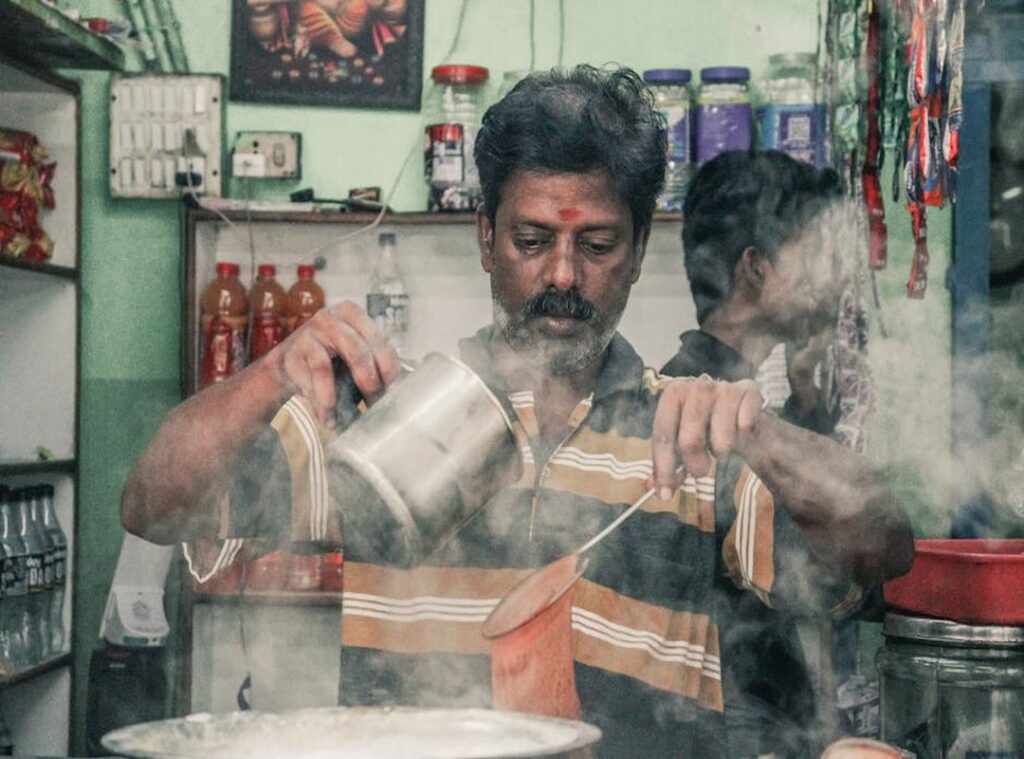
Picture the hustle and bustle of an Indian street corner or a cramped train station. In the middle of it all, you find the chai wallah. This person is more than just a vendor.
They’re a storyteller, a cultural icon, delivering steaming glasses of chai to anyone who needs a moment of rest. It’s more than just a drink. It’s a symbol of hospitality. (You don’t just offer someone water; you offer chai.)
You might think of it as just tea, but in India, “chai” is the common word for tea itself. This is where many in the West get it wrong by saying “chai tea” (it’s) like saying “tea tea” and sounds a bit off. The spiced version you might be thinking of is “masala chai.”
When you enter an Indian home or shop, what’s the first thing they do? Offer you chai. It’s a ritual, a gesture of welcome that’s deeply embedded in the culture.
Recipes vary across regions, adding to the rich mix of India’s chai culture. Some like it with black pepper for heat; others add fennel and almonds in Kashmiri chai. The history evolution chai has gone through reflects India’s diversity and adaptability.
Chai is more than a cup; it’s a communal experience. Curious about more chai traditions around the world? They all tell a story as lively as the people who drink it.
Doesn’t that make you want to grab a cup right now?
Chai Goes Global: How It Made the Coffee Shop Menu
Who would’ve thought chai, that humble spiced tea from India, would become a global sensation? I remember when it was just something you’d find in health food stores or if you were lucky, at a friend’s house. The late 20th century saw Westerners’ curiosity about different cultures and health trends spike, and chai rode that wave.
Then, the 1990s hit. Coffee shop culture exploded, and with it came the “chai latte.” Here’s where things got interesting. Traditional masala chai is rich and spicy, brewed with love.
But the Western version? Often sweeter, milkier, and made from some syrup or concentrate. It’s like comparing a homemade meal to fast food.
But I digress.
This evolution isn’t just about drinks anymore. Chai spices have infiltrated desserts and cocktails, making them a staple in modern culinary trends. Think chai-flavored ice cream or a spiced cocktail.
The versatility of chai is its superpower, adapting to tastes and trends across the globe.
Does this history evolution chai surprise you? It’s fascinating how something so traditional can morph into a modern-day craze. Maybe it’s the blend of nostalgia and novelty that keeps chai relevant today.
What’s next for chai? Only time will tell.
Savor the Story in Every Sip
Chai isn’t just a drink. It’s a journey through centuries of health, trade, and culture. From its origins as an Indian tonic to its British twist and now a cafe staple, chai tells a unique story.
When you sip it, you’re part of this history evolution chai. Each cup is more meaningful when you know its background. Want to experience its roots?
Explore chai recipes at home or find a traditional masala chai. Dive into the flavors and feel the history. Let your next cup be more than a drink; let it be an adventure in taste.
 Othrian Kelvayne has opinions about spiced ingredient fusion techniques. Informed ones, backed by real experience — but opinions nonetheless, and they doesn't try to disguise them as neutral observation. They thinks a lot of what gets written about Spiced Ingredient Fusion Techniques, Tea-Inspired Culinary Trends, Niche Nuggets is either too cautious to be useful or too confident to be credible, and they's work tends to sit deliberately in the space between those two failure modes.