If you’ve ever wondered how to bring the deep, aromatic warmth of chai into your everyday cooking, you’re in the right place. Chai isn’t just a drink—it’s a blueprint for building bold, balanced flavor through spice, heat, and infusion. This article explores how to translate those cozy, complex notes into desserts, breakfasts, and even savory dishes, using practical methods you can apply in your own kitchen.
We’ll break down the essentials of selecting whole spices, toasting for maximum aroma, and mastering the layering spices technique to create depth without overwhelming your dish. You’ll also discover tea-infused creams, syrups, and batters that capture authentic chai character.
Our approach is grounded in hands-on recipe testing, classic spice principles, and modern tea-inspired culinary trends—so you’re not just experimenting, you’re cooking with intention. By the end, you’ll know exactly how to infuse your meals with the rich, spiced soul of chai.
Unlocking Deep Flavor: The Art of Layering Spices
Great cooking isn’t about adding more spices; it’s about adding them at the right time. When you toss everything into the pan at once, volatile oils (aroma-packed compounds) burn off, leaving flavors dull. Instead, try the layering spices technique.
First, bloom whole spices in fat to release fat-soluble flavors. Next, stir in ground spices midway through cooking to deepen the base. Finally, finish with a pinch of spices or herbs for brightness.
For example, build a chai-inspired stew this way, and you’ll taste notes in bite. Pro tip: toast to avoid bitterness.
Why Layering Works: The Science of Flavor Release
Spices behave like tiny chemical orchestras. Some notes are fat-soluble, meaning their flavor compounds dissolve in oil or butter; others are water-soluble, releasing best into broth or tea. Think of oil as a VIP lounge where certain aromas finally relax and speak up.
That’s why blooming matters. To bloom spices—gently frying them in hot fat—is like turning on a microphone before the concert starts. Heat unlocks essential oils, dispersing them evenly and building a base layer that carries the dish.
Timing is everything. Aromatic compounds are volatile, evaporating at different speeds and temperatures. Add delicate spices too early and they vanish like a cameo in a Marvel movie. Add sturdy seeds too late and they stay muted. Mastering layering spices technique means staging each entrance so every flavor hits its cue. Control the heat, and you conduct the entire performance beautifully balanced.
Layer One: The Foundational Bloom
If flavor had a bass line, this would be it. Layer One is the deep, underlying base note of your dish—the part you may not see, but you’d absolutely miss if it were gone. This is where whole spices hit hot fat and TRANSFORM.
When to Add: At the very beginning of cooking, in properly heated oil or ghee, before any onions, garlic, or liquids.
Best Spices:
- Cumin seeds
- Mustard seeds
- Coriander seeds
- Whole cloves
- Cinnamon sticks
- Star anise
- Cardamom pods
These are hardy spices—meaning they can withstand direct heat without burning instantly. When heated in fat, they release fat-soluble flavor compounds (aromatic molecules that dissolve in oil, not water) (Harold McGee, On Food and Cooking).
How to Bloom Spices
- Heat 2–3 tablespoons of oil over medium heat.
- Test with one cumin seed—if it sizzles, you’re ready.
- Add whole spices.
- Stir gently until they crackle and become fragrant (30–60 seconds).
- Immediately proceed with your next ingredient.
Some argue powdered spices are faster. Sure. But they lack the slow-building depth this layering spices technique creates. It’s the difference between background music and a LIVE orchestra. For more global context, explore east meets west blending global spice traditions.
Layer Two: The Aromatic Middle
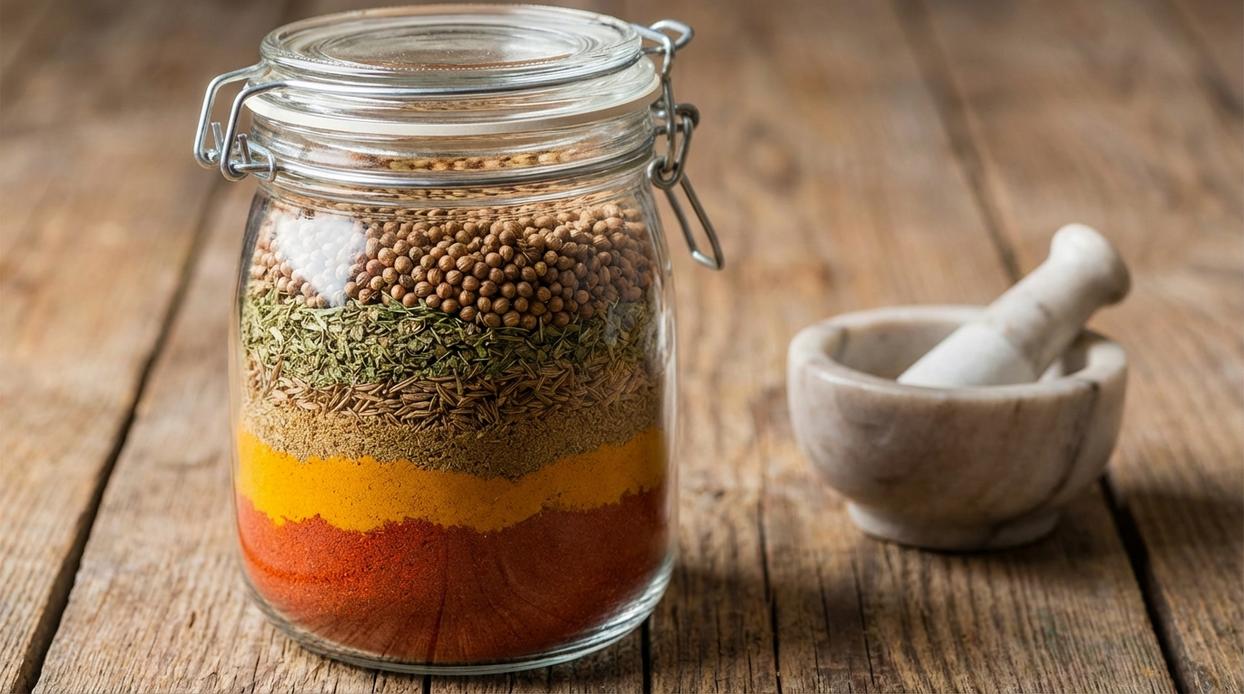
This is where flavor stops being one-dimensional and starts telling a story. Layer Two builds the “heart” of your dish—the warm, aromatic middle that binds everything together. In cooking, the heart refers to the dominant flavor body that bridges your base ingredients and your finishing notes.
After your aromatics (onions, garlic, ginger) have softened and you’ve added your main ingredient or liquid—like tomatoes, stock, or coconut milk—it’s time. This stage is PERFECT FOR DEPTH.
The best spices here are ground and delicate: turmeric powder, paprika, ground cumin, ground coriander, chili powder. These spices bloom quickly but burn easily (and burnt cumin is not the vibe).
Here’s the actionable technique that changes everything:
- Mix your ground spices with a small amount of water to form a paste before adding them to the pan.
This simple step prevents scorching and ensures even distribution. Instead of clumping or sticking, the spices dissolve smoothly into the liquid, coating every bite. Think of it like making a chai slurry before steeping—it guarantees balanced infusion.
Some cooks argue you can just toss the powders straight into the pot. Technically, yes. But the paste method delivers better aroma release and reduces bitterness—especially in high-heat cooking (Serious Eats notes that blooming spices properly enhances fat-soluble flavor compounds).
Mastering the layering spices technique at this stage means richer color, fuller aroma, and a cohesive flavor profile that tastes intentional—not accidental. Pro tip: stir continuously for 30–60 seconds after adding the paste to fully activate the oils.
Layer Three: The Finishing Flourish
If the first two layers build depth, Layer Three is the spark. Its purpose is simple: deliver a final, bright burst of aroma and top-note flavor that would otherwise fade during a long simmer. Top notes are the light, volatile compounds in spices and herbs—the scents that hit your nose first (and make everyone wander into the kitchen asking what smells so good).
When to add: in the last few minutes of cooking or just before serving. Heat dulls delicate flavors over time, so timing is everything.
Best choices for this layer:
- Delicate ground spices like freshly toasted cardamom
- Fragrant blends such as garam masala
- A pinch of cayenne for a lively kick
- Fresh herbs like cilantro or mint
Here’s the actionable move: finish your dish with intention. Stir a small pinch of garam masala into a simmering curry right before turning off the heat. Watch the aroma bloom instantly. Or scatter chopped mint over a spiced stew just before serving. That’s the layering spices technique in action.
The benefit? More aroma, brighter flavor, and a dish that tastes freshly made—even if it simmered for hours. Some argue finishing spices are unnecessary if the base is strong enough. But why settle for good when a 10-second flourish delivers unforgettable? (It’s the culinary equivalent of a perfect closing line.)
Your Path to Flavor Mastery
You now have a complete, three-stage method for layering spices, moving beyond random sprinkling to intentional flavor building. This layering spices technique transforms flat dishes into dynamic ones by creating a deep base, an aromatic heart, and a vibrant finish. Food scientists note that fat-soluble compounds in spices release differently depending on heat timing (Harvard T.H. Chan School of Public Health), which explains why bloomed cumin tastes richer than raw cumin.
In other words, timing isn’t cheffy flair—it’s chemistry. Start with a familiar recipe, apply the method, and notice the fuller aroma and balanced depth (yes, even your weeknight lentils). That’s flavor mastery in motion.
Bring the Warmth of Chai Into Every Dish
You came here looking for creative ways to infuse your cooking with the warmth, depth, and complexity of chai-inspired flavors. Now you know how to balance bold spices, experiment with tea infusions, and use the layering spices technique to build rich, unforgettable dishes from the first aroma to the final bite.
If you’ve ever struggled with flat flavors or recipes that feel one-dimensional, the secret has always been in how you combine and toast, steep, and blend your spices. Mastering that approach transforms ordinary meals into experiences that feel comforting, aromatic, and deeply satisfying.
Now it’s time to put it into action. Start experimenting with your own chai spice blends, try infusing tea into sauces and desserts, and explore new spice pairings in your kitchen this week. Thousands of home cooks are already elevating their meals with these proven methods—don’t let your dishes fall flat.
Brew boldly, cook confidently, and let every meal carry the signature warmth of chai.