If you’ve ever hesitated at the price tag of saffron, you’re not alone. Many home cooks and tea enthusiasts want to understand why saffron is expensive before deciding whether it truly deserves a place in their kitchen. This article is designed to answer that question clearly and practically—breaking down what makes saffron so rare, how it’s harvested, and why its flavor, aroma, and color are impossible to replicate.
Beyond the cost, we’ll explore how to use saffron effectively in chai blends, infused dishes, and spiced desserts so you get the most value from every strand. Our insights are grounded in culinary research, traditional harvesting knowledge, and careful analysis of global spice production practices. By the end, you’ll not only understand the factors behind saffron’s premium price, but also how to confidently incorporate this prized spice into your own tea rituals and recipes.
Unraveling the Mystery of “Red Gold”
Saffron is the world’s most expensive spice by weight—and naturally, people wonder why saffron is expensive in the first place. The answer isn’t hype; it’s agriculture and effort. This article breaks down the real reasons behind its price, from the fragile Crocus sativus flower it blooms from to the painstaking hand-harvest required to collect its crimson stigmas (just three threads per flower). Moreover, each blossom must be picked at dawn during a short harvest window. Because yields are tiny and labor is immense, the cost reflects scarcity, precision, and time—not luxury branding.
A Flower of Patience: The Demanding Nature of Crocus Sativus
Saffron begins with Crocus sativus, a delicate purple flower that offers only three tiny crimson stigmas at its center. That’s it. Those three threads are the entire spice (yes, REALLY). When people ask why saffron is expensive, I always think about that microscopic yield first.
This plant is famously picky. It demands:
- Well-drained, sandy soil (wet roots are its downfall)
- Hot, dry summers
- Cool autumns with moderate rainfall
Too much humidity? Rot. Sudden frost? Damage. It thrives mainly in Mediterranean-like climates, which is why Iran, India, and Spain dominate production (FAO data consistently highlights these regions).
Then comes the race against time. The flowers bloom for just one to three weeks each year. Every blossom must be hand-picked during that brief window, often at dawn before the petals fully open. MISS A DAY, and you lose yield.
If that weren’t enough, Crocus sativus is sterile. It produces no seeds. Farmers must dig up and divide its underground corms—bulb-like storage organs—and replant them by hand. No shortcuts. No mechanized miracle.
Some argue modern agriculture could automate this. I disagree. The fragility of the flower makes large-scale mechanization risky (and costly). In my view, saffron’s labor intensity isn’t a flaw—it’s precisely what gives it its mystique.
The World’s Most Labor-Intensive Harvest
If you’ve ever wondered why saffron is expensive, the answer begins in the fields—before sunrise.
Saffron comes from the Crocus sativus flower, and its harvesting process remains 100% manual, largely unchanged for centuries. There are no machines, no shortcuts, no industrial hacks. Just hands. Skilled ones.
Each autumn morning, workers head into the fields at dawn. This timing isn’t poetic—it’s practical. The delicate purple flowers must be picked before the sun fully rises, because heat can damage the fragile red stigmas (the threadlike parts that become saffron spice). Every single flower is gently plucked by hand to avoid bruising.
Then comes the even more painstaking step. Inside each blossom are only three crimson stigmas. These must be carefully separated by hand, requiring intense focus and dexterity. One slip can waste the entire flower. Imagine performing microsurgery on something smaller than a paperclip—thousands of times.
The scale of labor is staggering:
- 150–200 flowers produce just one gram of saffron.
- Up to 75,000 flowers are needed for a single pound.
That means hours of harvesting for what fits in a tiny jar.
For home cooks, this explains why even a small pinch carries a premium price—and why proper storage in an airtight container away from light matters (pro tip: light degrades its aromatic compounds).
Understanding this process also deepens appreciation for other rare spices, much like those discussed in exploring rare pepper varieties beyond black pepper.
When you sprinkle saffron into chai or rice, you’re not just adding flavor—you’re honoring one of the most labor-intensive harvests on Earth.
From a Field of Flowers to a Pinch of Spice: The Yield Problem
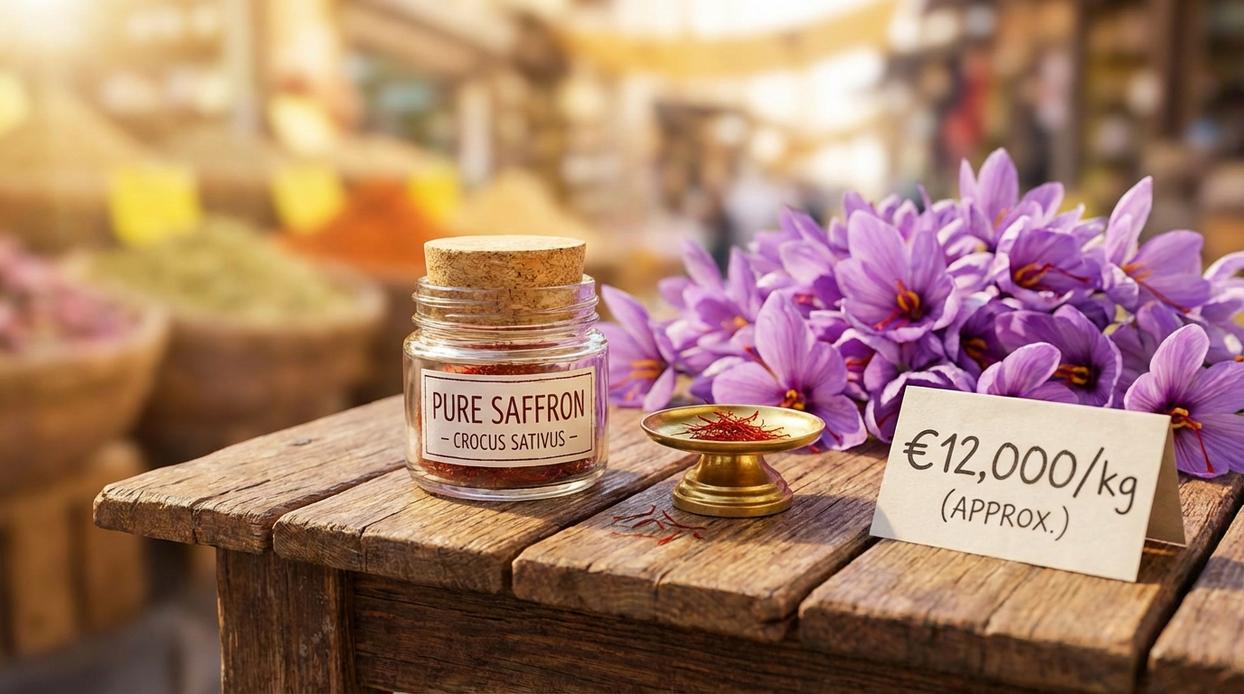
Saffron’s price starts in the soil. Each crocus sativus flower produces just three tiny red stigmas—the threadlike parts that become saffron. Those stigmas must be handpicked, one flower at a time (no machines, no shortcuts). It takes roughly 150–170 flowers to yield a single gram of dried saffron, according to agricultural data from the FAO and multiple university extension studies.
Then comes the dramatic shrinkage. Fresh stigmas are mostly water. During drying, they lose about 80% of their weight, concentrating flavor but slashing volume. Imagine filling a basket with delicate crimson threads, only to watch it collapse into a fraction of its size after curing (like spinach in a hot pan, but far pricier).
Now scale that reality. A football field–sized plot planted with crocus flowers typically produces just 300–500 grams (about one pound) of dried saffron. That’s the agricultural math behind why saffron is expensive.
Some argue high prices are driven mainly by branding or luxury demand. But the numbers tell a clearer story: limited biological yield, intense labor, and massive post-harvest weight loss create genuine scarcity. Pro tip: When a spice requires tens of thousands of flowers per pound, you’re paying for physics, not hype.
Not All Saffron is Created Equal: Grading and Global Markets
The final price of saffron isn’t just about harvest labor—it’s about quality. In my view, this is where most buyers misunderstand why saffron is expensive. International standards like ISO 3632 grade saffron based on three measurable compounds: crocin (color strength), picrocrocin (flavor), and safranal (aroma). Higher concentrations mean deeper color, richer taste, and a more intoxicating fragrance.
Top-tier varieties such as Sargol or Negin contain only the pure red stigma tips. Lower grades include yellow style threads, which dilute potency and value. The difference is visible—and absolutely noticeable in a cup of chai or a saffron-infused risotto.
- Pro tip: If the threads look too uniform or overly bright, question them.
Because saffron commands high prices, adulteration is common. Some sellers mix in safflower or dyed corn silk. Personally, I’d always choose certified, lab-tested saffron—paying more upfront beats flavorless disappointment later.
Saffron’s price tag often sparks outrage. However, the real story isn’t luxury hype—it’s labor and rarity. To understand why saffron is expensive, consider the facts:
- Crocus sativus is a fragile flower demanding precise climate and soil conditions.
- Each bloom yields just three crimson stigmas.
- Harvesting is entirely manual, often completed at dawn to protect potency.
In other words, no machines, no shortcuts (not even Willy Wonka could automate this). Critics argue it’s overpriced. Yet when yields are astonishingly low, the cost simply mirrors human effort. Ultimately, every thread represents a journey from delicate blossom to powerful spice.
Elevate Your Kitchen with the World’s Most Luxurious Spice
You came here to understand what makes saffron so special—and now you know. From its delicate harvest process to its unmatched aroma, color, and flavor, every strand carries a story of patience and craftsmanship. Most importantly, you now understand why saffron is expensive and why that price reflects its rarity, labor-intensive cultivation, and extraordinary culinary impact.
If you’ve ever hesitated to use saffron because of the cost, you’re not alone. Many home cooks worry about wasting such a precious ingredient or not unlocking its full potential. But when used correctly, even a small pinch transforms ordinary dishes into unforgettable experiences.
Now it’s your turn to bring that golden magic into your kitchen. Start with a simple saffron-infused rice, bloom the threads properly, and taste the difference for yourself. Explore more chai-infused and spice-forward recipes to build confidence with premium ingredients.
Ready to cook with confidence and turn rare spices into signature flavors? Discover our top-rated saffron recipes and step-by-step infusion guides—designed to help you master luxury ingredients without the guesswork. Your next show-stopping dish starts today.