
Picture this: you grab a chai latte from the corner cafe, sweet and frothy. It’s comforting, sure. But have you ever wondered about the real deal?
Real chai isn’t just a drink; it’s a story that spans continents. The problem is, most don’t know the depth of chai traditions world. They sip without understanding its journey.
I get it. Chai seems simple, but its roots dig deep into history. This article isn’t just about sipping tea.
It’s about traveling through time, tasting the spices of distant lands, and hearing the whispers of ancient trade routes. I’ll show you global chai customs that transform each cup into a cultural mix. Trust me, appreciating these traditions will raise your experience beyond that local latte.
Let’s explore together.
The Soul of Chai: India’s Masala Tradition
Let’s get something straight. Chai isn’t a fancy concoction to impress Instagram followers; it’s the heart of Indian culture. “Chai” means “tea” and “masala” is “spice mix” (simple,) right? These basics make a brew that’s as original as it gets.
The essentials? Strong black tea, preferably Assam, full-fat milk (not that watery skim stuff), a sweetener (jaggery if you’re fancy, sugar if you’re not), and the masala. Each component holds its own.
The tea provides body, the milk smooths it out, and the sweetener ties the flavors together.
Regarding spice, it’s like a mini orchestra. Green cardamom offers a floral note, cinnamon brings warmth, cloves add depth, ginger gives a kick, and black peppercorns spice it up. This blend is the garam masala of chai.
Each spice plays a part, creating a harmony that’s hard to resist.
Why do I care so much? Because chai is not just a drink. It’s a ritual, a connection.
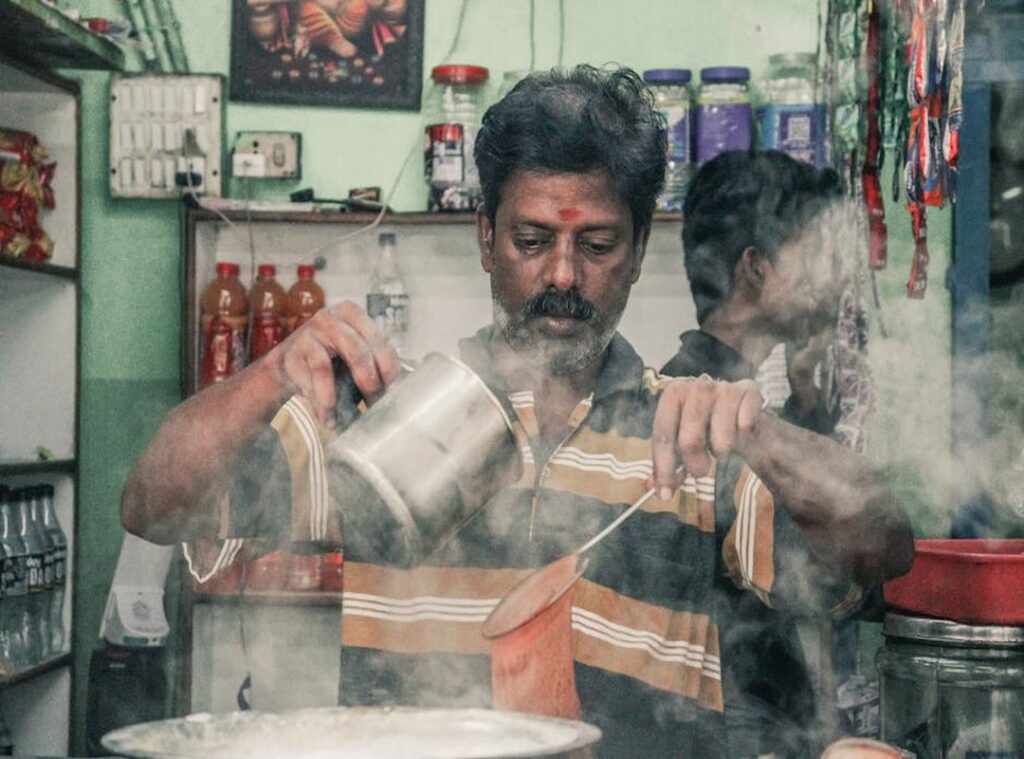
Enter the ‘Chai Wallah’. They’re not just brewing tea but stories and memories. A cup here, a chat there.
It’s a daily routine of hospitality that transcends mere beverage consumption.
But chai isn’t a one-flavor-fits-all. India has regional twists that make it more intriguing. Ever tried Kashmiri chai with fennel?
Or Western India’s lemongrass version? They showcase the diversity at the heart of chai traditions world over.
For those ready to experiment beyond the classic, why not explore some uncommon chai brewing techniques? It’s for those who like to spice things up (literally). Chai is about exploring, experiencing, and savoring each cup.
So, what’s stopping you from brewing your own story?
Chai on the Move: How Spiced Brew Traveled the World
When you think of chai, you probably imagine a steaming cup of spicy, sweet goodness. But chai has taken quite the journey, morphing along ancient trade routes and adapting to every culture it touched. It’s fascinating how each region embraced it, adding their own twist.
Let’s start with Tibet’s Po Cha, or butter tea. It’s not your usual cup. This brew is savory and salty, using pu-erh tea, yak butter, and salt.
Sounds strange? It’s a lifesaver in the harsh, high-altitude Himalayas. The high energy content was important for survival there.
Who knew a drink could be so practical?
Now, take a trip to the Middle East. Here, you’ll find Karak Chai. It’s not just tea; it’s an experience.
Imagine tea and spices stewing together for ages, the scent filling the air. Sometimes they throw in saffron, making it feel luxurious. It’s rich, creamy, and intense.
Evaporated or condensed milk gives it that thick texture. It’s a chai tradition that connects with anyone who loves a bold cup.
Then there’s East Africa, where chai has its own identity. Chai Tangawizi is a product of Indian influence, brought over by merchants. The focus here?
Fresh ginger, called ‘tangawizi’ in Swahili. It’s spicy and hits you with a ginger punch. Mix that with lots of milk and sugar, and you’ve got a sweet, milky concoction that’s distinctively African.
It’s a how chai adapts to local tastes.
These are just a few examples of how chai has evolved across the globe. It’s a living history of trade and adaptation. And it’s not just me saying this.
Check out the culture of chai: a conversation with seema hari for more takeaways.
What does this all mean for chai traditions world? It’s a reminder of how open we are to change and how a simple brew can hold stories of journeys and transformations. So next time you sip, think about where it came from and the journey it took to reach your cup.
The Modern Spice Rack: Chai’s Culinary Renaissance
Chai, once just a comforting brew, has exploded into a versatile flavor profile. Gone are the days when chai was just a homely cup of tea. Does chai really have a place in today’s culinary trends?

Absolutely. Cafes are leading this shift, introducing drinks like the ‘Dirty Chai’ (a) daring blend of chai and espresso. It’s not just cow’s milk anymore.
People are going wild for chai with oat, almond, and other alternative milks. The creamy texture of oat milk, for instance, adds a whole new dimension.
Desserts are no exception. Take chai-spiced panna cotta or cardamom-chai ice cream. These aren’t just desserts; they’re experiences.
You’ve got to try chai-dusted churros. The mix of spice and sweetness is a game changer. It’s like adding a dash of Bollywood flair to your dessert plate.
Now, let’s talk cocktails. You might be thinking, “Chai in my drink?” Trust me, it works. Distillers and mixologists are infusing spirits with chai spices, creating aromatic masterpieces.
Imagine a ‘Chai Old Fashioned’ where bourbon meets the warm embrace of chai spices. It’s about the taste. It’s the aroma, the complexity.
It’s something you sip slowly, savoring every note.
You might wonder why chai has become such a sensation. It’s about fusion, innovation, and breaking away from the chai traditions world once knew. If you’re curious about where these flavors come from, I suggest exploring rare chai ingredients.
It’s fascinating to see how these elements come together.
This chai evolution is more than a trend; it’s a culinary revolution. It challenges your palate and expands your flavor horizons. So, next time you’re at a café or a bar, give chai a shot.
You might just discover your new favorite flavor.
From Their Kitchen to Yours: Brewing Techniques
Let’s talk about chai traditions world. You want to start with the basics? Sure thing.
The classic stovetop Masala Chai is your gateway. Boil water with black tea leaves, add milk (full fat, always), sugar, and spices like cardamom and ginger. That’s your base.
Now, for flavor-hacking. Want a Karak Chai vibe? Simmer it for ten more minutes and swap in evaporated milk.
Feel the difference? You should. This isn’t just a recipe; it’s a playground.
Experiment with your own spice blend. (Why not throw in some star anise or peppercorns?) Trust me, your signature chai will outshine any store-bought mix.
Pro tip: use freshly ground spices. It makes all the difference. Ready to brew?
Let’s do it.
Spice Up Your Chai Journey
Ready to dive into the chai traditions world? You’ve traveled from Mumbai’s streets to the cocktail bar. Now, it’s your turn.
The world of chai isn’t just coffee shop lattes. It’s a connection to culture and flavor. Step into your kitchen.
Experiment. Discover your perfect cup. Add a new spice or technique.
Satisfy your craving for richness. Want the best recipes? Check out chaitomin.com.
They’re the go-to for flavor buzz and chai inspiration. Start your journey today.
 There is a specific skill involved in explaining something clearly — one that is completely separate from actually knowing the subject. Jennifer Thorpecania has both. They has spent years working with chai-focused recipes and flavors in a hands-on capacity, and an equal amount of time figuring out how to translate that experience into writing that people with different backgrounds can actually absorb and use.
Jennifer tends to approach complex subjects — Chai-Focused Recipes and Flavors, Flavor Buzz, Infused Cooking Tips and Hacks being good examples — by starting with what the reader already knows, then building outward from there rather than dropping them in the deep end. It sounds like a small thing. In practice it makes a significant difference in whether someone finishes the article or abandons it halfway through. They is also good at knowing when to stop — a surprisingly underrated skill. Some writers bury useful information under so many caveats and qualifications that the point disappears. Jennifer knows where the point is and gets there without too many detours.
The practical effect of all this is that people who read Jennifer's work tend to come away actually capable of doing something with it. Not just vaguely informed — actually capable. For a writer working in chai-focused recipes and flavors, that is probably the best possible outcome, and it's the standard Jennifer holds they's own work to.
There is a specific skill involved in explaining something clearly — one that is completely separate from actually knowing the subject. Jennifer Thorpecania has both. They has spent years working with chai-focused recipes and flavors in a hands-on capacity, and an equal amount of time figuring out how to translate that experience into writing that people with different backgrounds can actually absorb and use.
Jennifer tends to approach complex subjects — Chai-Focused Recipes and Flavors, Flavor Buzz, Infused Cooking Tips and Hacks being good examples — by starting with what the reader already knows, then building outward from there rather than dropping them in the deep end. It sounds like a small thing. In practice it makes a significant difference in whether someone finishes the article or abandons it halfway through. They is also good at knowing when to stop — a surprisingly underrated skill. Some writers bury useful information under so many caveats and qualifications that the point disappears. Jennifer knows where the point is and gets there without too many detours.
The practical effect of all this is that people who read Jennifer's work tend to come away actually capable of doing something with it. Not just vaguely informed — actually capable. For a writer working in chai-focused recipes and flavors, that is probably the best possible outcome, and it's the standard Jennifer holds they's own work to.